
Cool-Down Exercises
Because the way most of us use our voices when we sing is very different from the way we use our voices for speech throughout the rest of our waking hours, it can be helpful to remind our bodies of what “normal” feels like by engaging in a few easy exercises, commonly called “cool-downs.” And while there is little to no scientific evidence that cool-downs have real long-term benefits on vocal health, a 2025 study did suggest that “vocal cool-down exercises are more effective in reducing perception of vocal fatigue after intense vocal loading than solely warm-up exercises or no exercises at all.” (In other words, cool-downs help our voices feel less tired. And that’s a good thing!)
I’ll generally recommend specific cool-downs during your lesson based on the work we’ve done together and the work I’ve asked you to do during the coming week, but feel free to use the resources on this page to remind yourself of the what, the why, and the how of this valuable self-care habit!
Can’t find something here that I’ve mentioned in our lessons? Check your lesson notes for direct links, or review the password-protected Resource Vault in your Google Drive.
Respiratory system
The #1 request I get from new students is “I want to learn how to breathe better.” It’s pretty obvious that we breathe differently for singing than we do for sitting at the dinner table—so after a session of vigorous singing, why not start with an exercise to slow and calm your breathing?
Try a set of “Box Breathing”—inhale, suspend, exhale, suspend, in equal parts. Follow the animation in the video to help slow your breathing down—and as you do so, allow your attention gently to scan along your torso: neck, shoulders, chest, belly—areas that we often activate specially for singing. If there is tension anywhere, imagine sending your breath into those areas.
Stretching & self-massage
If you experience excess tension in your neck, jaw, or tongue after singing, you may benefit from stretching and self-massage of those muscles. Keep in mind, though, that you’ll want to hold each stretch for much longer than the video demonstration. (Current science suggests the ideal is to hold each stretch for a total of 60 seconds—so, four “reps” of 15 seconds each, three reps of 20 seconds each, etc.) Please check with your medical professional before engaging in any activity that might lead to injury.
Dean Pohlman of Man Flow Yoga offers a great series of stretches to help restore and relax your neck muscles after a hard day of singing (or, you know, life). Remember to hold each stretch for 45 to 60 seconds!
This series is designed to help release knots and tension in the “strap muscles” that help our head to balance at the top of our spine. (Most of us store a lot of tension in these muscles, and overuse of the “straps” during singing is suuuuuper common.)
This series is designed to help relax the “strap muscles” that help our head to balance at the top of our spine. (Most of us store a lot of tension in these muscles, and overuse of the “straps” during singing is suuuuuper common.)
Here’s a self-massage that’s designed to target the extrinsic laryngeal muscles—the muscles that move our larynx up and down as we morph our vocal tract into the various shapes we’re called upon to make for particular sounds.
Tongue tension is one of the most frequent challenges singers face. Try adding this self-massage to your post-singing routine—or even elsewhere during your day—to help your tongue learn to relax!
Tongue tension is one of the most frequent challenges singers face. Try adding this self-massage to your post-singing routine—or even elsewhere during your day—to help your tongue learn to relax!
Tongue exercises
Our tongue is The Boss when it comes to singing vowels. Don’t give it a workout and then abandon it! Here are a few ways to show your tongue some love after a singing workout.
SingGeek offers this fun video on how we use our tongue during singing, and how to avoid tongue tension during and after singing. (If you want to jump straight to the part dealing with tongue tension, skip ahead to 4′40″ in the video.)
This 5‑minute routine is great for your intrinsic tongue muscles—the ones that change the shape of your tongue to help you make different vowel sounds and colors.
This 5‑minute routine is great for your intrinsic tongue muscles—the ones that change the shape of your tongue to help you make different vowel sounds and colors.
When you’ve got the time for an all-out tongue, lip, and mouth routine, this one’s the best I’ve found. Chances are extremely good that your tongue won’t have been making many of these motions while you were singing! (If you happen to have a spoon handy, maybe wash that off before doing these.)
Vocal folds
When cooling down your vocal folds, it’s important to consider both how you’ve been working your voice during your singing, and also how your “resting” voice functions. The basic concept is pretty straightforward: figure out what you’ve been doing a lot of, and do a little of the opposite of it: if you’ve been belting (lots of strong chest-voice work), cool down with gentle head voice exercises. If you’ve been hanging out near the bottom of your range, think high and light. The following exercises can be done anywhere in your range, but feel free to ask me for guidance if you’re not sure what pitches to use!
SOVT’s
Semi-Occluded Vocal Tract (SOVT) exercises are a great way to “remind” your voice of a gentle, relaxed baseline of functionality. Here are several options; choose the one that works best for you!
Blowfish
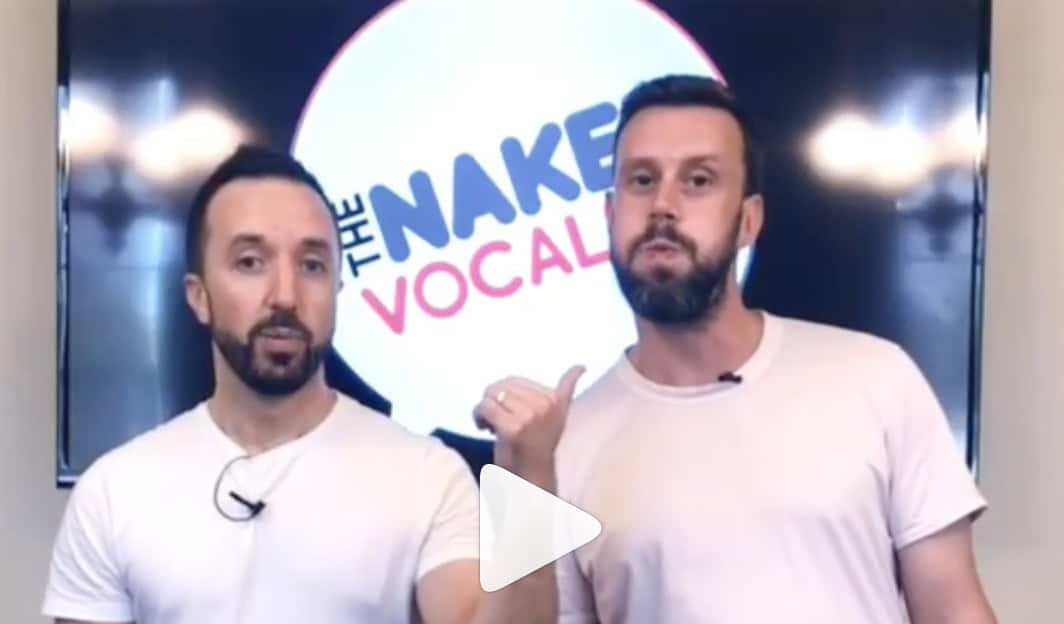
Blowfish are great because they require zero “props,” and most people can do them hands-free while driving home from a lesson. The Naked Vocalist did a great write-up on Blowfish that offers a lot of helpful reminders and tips, and includes a video demonstration.
Lip Trills
I personally love lip trills—I use them all the time—but a lot of singers have trouble mastering this technique. If you’d like to share in my lip-trilling joy but struggle to keep the buzz going, see if this video helps!
Lip Trills
I personally love lip trills—I use them all the time—but a lot of singers have trouble mastering this technique. If you’d like to share in my lip-trilling joy but struggle to keep the buzz going, see if this video helps!
Straw Phonation
Perhaps the most famous of the SOVT’s, straw phonation offers a practically infinite array of adjustable “variables” that can make the exercise exactly what you need it to be—but of course all those variables can be confusing. SingWise tackles a lot of common questions about “straw singing” in this video.
NOVT’s
Okay, “Non-Occluded Vocal Tract” exercises aren’t really a thing—they’re basically just singing—but it’s worth making the distinction for our purposes. These super-low-impact exercises are great for reaching your vocal relaxation goals!
Kathleen Hansen’s Cool Down
Okay, yes, Kathleen does start out with an SOVT here, but most of this routine is exactly the kind of gentle singing that I call NOVT’s. (Plus, cat cameo.)
Note: The study Kathleen mentions was completed in 2015, but its conclusions were echoed by the 2025 study I cited at the top of this page.
Kathleen Hansen’s Cool Down
Okay, yes, Kathleen does start out with an SOVT here, but most of this routine is exactly the kind of gentle singing that I call NOVT’s. (Plus, cat cameo.)
Note: The study Kathleen mentions was completed in 2015, but its conclusions were echoed by the 2025 study I cited at the top of this page.
Jeff Rolka’s “Warm Down”
Yep, some people call them “warm downs”—potato, potato. I love that Jeff’s video is designed to be sung in whatever octave is most comfortable/useful for you. Remember to sing gently and smoothly—and yes, he really does want you to do each exercise twice!
Oo-Oh-Ah
A million years ago I recorded this video to help expand the range of our lighter timbres—head voice, falsetto, mechanism 2, whatever term you prefer—downward. The exercise is still good for that, but it’s also a great way to overcome the “I’ve been belting for an hour and my cords are trying to take over the universe” feeling. (I’m told.) If you want to jump straight to the exercise, it’s at 3′09″ or so.
Oo-Oh-Ah
A million years ago I recorded this video to help expand the range of our lighter timbres—head voice, falsetto, mechanism 2, whatever term you prefer—downward. The exercise is still good for that, but it’s also a great way to overcome the “I’ve been belting for an hour and my cords are trying to take over the universe” feeling. (I’m told.) If you want to jump straight to the exercise, it’s at 3′09″ or so.